
Content:
- 1 Successful Franchise Fast Facts
- 2 Successful Restaurant Franchises vs. Just Profitable Ones
- 3 The Metrics That Support Long-Term Franchise Success
- 4 What Sustained Success Looks Like: The Diner and Breakfast Segment
- 5 How to Evaluate a Franchise for Long-Term Success
- 6 Ready to Own a Franchise Built to Last?
- 7 Frequently Asked Questions
- 7.1 What is the most successful restaurant franchise?
- 7.2 What type of support should franchisors offer their franchisees?
- 7.3 What’s the difference between a profitable and a successful franchise?
- 7.4 What franchise can I start with a smaller budget?
- 7.5 How do I know if a franchise will last?
- 7.6 Are restaurant franchises a safe investment?
Choosing a restaurant franchise is one of the biggest decisions an entrepreneur can make. Before you commit your capital, it helps to know what sets the most successful restaurant franchises apart. The best ones keep performing long after other brands fade following one strong opening year.
Successful Franchise Fast Facts
- The most successful restaurant franchises win on durability, not one year’s profit.
- Durable success rests on unit growth rate, franchisee retention, brand longevity with adaptation, and financial resilience.
- Steady net unit growth beats a fast rise followed by closures.
- Owners who renew and expand are a strong sign the model works.
- Read Item 19 and Item 20 of the FDD, and study five years of unit counts.
- The all-day diner and breakfast segment earns across four dayparts, which spreads risk.
Successful Restaurant Franchises vs. Just Profitable Ones
The most successful restaurant franchises sustain performance over decades, not just one profitable year. They keep opening healthy new locations and keeping owners in the system, and they adapt to the market without losing what made them recognizable. That durability is a different thing from a single good quarter.
“Profitable” measures the return a business earns in one period. A location can be profitable this year and closed in three years. So a profitable franchise and a lasting one are not always the same brand.
Think of it as the difference between a sprint and a marathon. Plenty of concepts sprint to a strong first year but run out of momentum. The successful restaurant franchises are the ones still standing, and still growing, ten and twenty years later.
When people search for the most profitable restaurant franchises, they usually want a ranked list of top earners. That question matters, but it only captures one moment in time. Experts measure durable success across many years and several economic cycles.
This article reframes the question. Instead of asking which brands earn the most right now, it asks which brands have proven they can keep performing. Four measurable signals help you tell the difference.
The Metrics That Support Long-Term Franchise Success
A serious buyer should read a franchise’s history the way an investor reads a company’s track record. The Franchise Disclosure Document (FDD) tells you far more than a single earnings figure.
Three signals point to durable success: franchisee retention, brand longevity paired with adaptation, and financial resilience. Each one is something you can check before you sign. The sections below define them in plain terms.
None of these signals is hard to find. They live in public filings, brand histories, and conversations with current owners. Together they explain why the most successful restaurant franchises keep performing while others quietly disappear.
Unit Growth Rate and System Size
Unit growth rate is the number of net new locations a franchise opens over time, after closures are subtracted. Steady, sustainable growth over a long period signals real demand and a business model owners can repeat in new markets.
Watch out for a brand that expands fast and then shrinks. A wave of openings followed by closures often means the model was harder to run than it looked. Slow and steady growth usually beats a spike.
System size adds a second layer. A larger network can buy ingredients at better prices and share marketing costs across many owners.
Scale gives useful context here. The International Franchise Association’s 2026 franchise economic outlook estimated the US franchise sector at about 832,521 establishments in 2025.
Franchise activity reached $907.3 billion in output and nearly 8.8 million jobs, close to 3% of US GDP. The IFA projects growth to 845,000 establishments in 2026.
Franchisee Retention and Support
Franchisee retention means owners who stay, renew their agreements, and open additional units. It is a trust signal. Owners re-invest their own money when the model works and the franchisor helps them succeed.
Strong franchisors back their owners with real resources. Look for initial and ongoing training, marketing support, real estate guidance, and operational coaching. You can read about the kind of franchise owner support a brand offers before you commit.
There is no single published benchmark for a “good” renewal rate, so be cautious with any brand that quotes one as proof. Instead, ask current owners whether they would buy in again. Their honest answers tell you more than a headline percentage.
Multi-unit owners provide a strong tell. When an operator runs three or four locations, they have voted with their wallet more than once. That pattern shows up often in the most successful restaurant franchises.
Brand Longevity and Market Adaptation
Brand longevity is decades of continuous operation. Adaptation is the steady updates to menu, format, ordering technology, and store design that keep an older brand relevant. The two work together, because a name only lasts if it keeps meeting new expectations.
Adaptation is also how brands survive downturns. A franchise that adds new dayparts or digital ordering options can hold its ground when spending tightens. A brand that stops changing tends to lose relevance.
For a buyer, age alone is not enough. Ask what the brand looks like now compared with ten years ago. The successful restaurant franchises can point to real updates, not just a long history.
Financial Resilience Through Economic Cycles
Financial resilience is a brand’s ability to hold up when consumer spending slows. Franchises with broad recognition and shared marketing often weather tough years better than a single independent shop.
The sector has grown even in uneven conditions. According to the IFA franchise economic report, US franchising grew 2.2% in 2024.
That beat the IFA’s earlier 1.9% forecast for the sector. It also marked the second straight year franchising outpaced the broader US economy.
Shared marketing is part of the story. Owners pool ad dollars, so a downturn does not silence a single store’s voice. Scale keeps the brand visible when smaller competitors go quiet.
Loan data adds useful risk context, too. An FTC franchise loan analysis reviewed 66,291 SBA-backed franchise loans from 2013–2023. It found a default rate of 3.9%, meaning the large majority were repaid. This does not make franchises statistically safer than independent businesses.
What Sustained Success Looks Like: The Diner and Breakfast Segment
Some segments carry steadier demand than others, and that affects how long a brand can last. Breakfast and all-day dining draw traffic across the whole day, from early risers to the late-night crowd. That continuous demand spreads risk across more hours.
The segment you choose shapes your odds of lasting. A concept that only sells one meal depends on one rush. A four-daypart concept earns from morning through night, which smooths out slow periods.
Breakfast also holds up as a habit. People still eat eggs and coffee when they cut back on pricier outings. That steadiness is one reason breakfast and diner brands appear among successful franchise restaurants across many small and mid-sized markets.
The restaurant franchise segment is large and growing. A QSR franchise growth report says the IFA projects roughly 281,000 US quick-service and restaurant franchise establishments in 2026.
Those businesses would employ about 5.2 million people. The IFA credits brand recognition, centralized marketing, purchasing scale, and franchisor support.
Huddle House: A Case Study in Staying Power
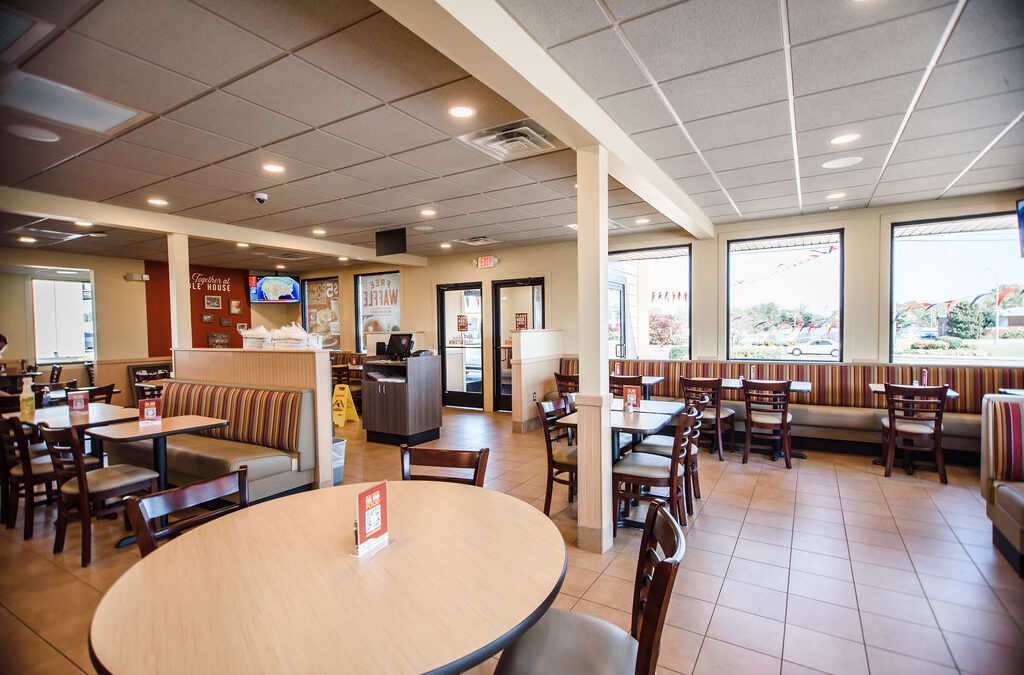
Huddle House shows what the four signals look like in one brand. It has been franchising since the 1960s, and today it has nearly 300 locations open or in development across 25 states. That is longevity and steady growth in the same story.
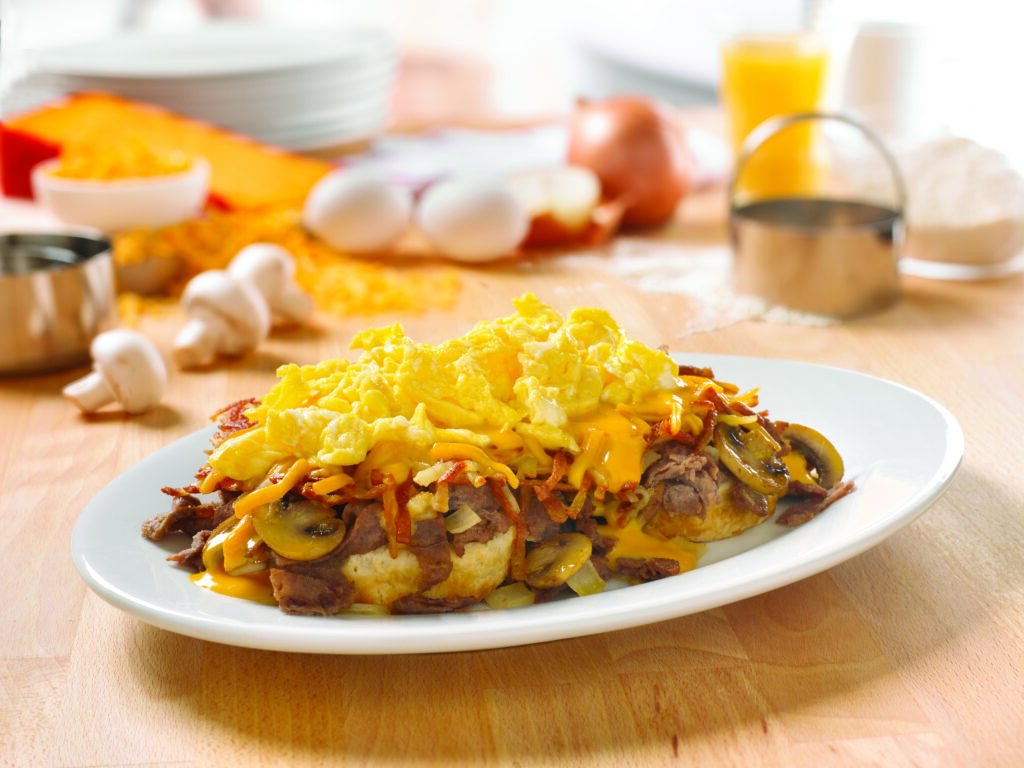
The menu runs on an all-day, four-daypart model, serving breakfast, lunch, dinner, and late-night meals. That range gives owners diverse revenue throughout the day rather than one busy window. You can read more about these diner franchise opportunities and how the model works.
The brand also leans into markets that larger chains overlook. Huddle House has long focused on small towns and rural areas where a gathering spot is in demand. That focus has helped it stay open in places where a single-daypart concept might struggle.
Flexibility is also part of staying power. Huddle House operates in end-cap, in-line, freestanding, conversion, and non-traditional sites like travel plazas. In addition, It backs owners with an in-house supply chain, training, marketing support, and operational coaching. That help is a big reason to look at why prospective owners franchise with Huddle House.
In 2025 the brand rolled out a design refresh and a new “Express” format built for smaller footprints. Investment figures vary by format and site, so review the current cost details rather than a single number.
Corporate-owned restaurants act as testing grounds for new ideas before they reach owners. That approach lowers the risk each operator takes on a change. It is the kind of practical support you look for in the most successful restaurant franchises.
How to Evaluate a Franchise for Long-Term Success
You can judge durability before you buy. Treat the FDD and the brand’s public record as your evidence, and give more weight to multi-year patterns than to one flashy statistic.
The goal is to separate the successful restaurant franchises from the brands that only look good on paper. A short, honest checklist keeps you focused on evidence rather than sales talk.
Use this checklist as a starting point:
- Read Item 19 and Item 20 of the FDD for financial performance and brand history.
- Track net unit counts across at least five years, not one.
- Ask how many owners renew and how many run more than one location.
- Weigh the entry cost against the training and support you actually receive.
- Judge how the brand has adapted its menu, formats, technology, and store design.
Entry cost is one input, not the whole decision. A lower restaurant franchise cost can be attractive, but aspiring owners should measure it against the support behind the brand. For a broader view of options, see this guide to the best restaurant franchise to open.
Ready to Own a Franchise Built to Last?
If you want a brand with a decades-long record and hands-on support, Huddle House is worth a close look. You get an all-day model, flexible store formats, an in-house supply chain, and coaching built to help owners succeed in their hometowns. When you are ready to talk through the numbers and find your market, start your franchise journey with our team.
Frequently Asked Questions
What is the most successful restaurant franchise?
There is no single answer, because “successful” depends on how you measure it. The strongest candidates combine decades of operation, steady growth, high owner retention, and ongoing adaptation, as long-running brands such as Huddle House do. In addition to longevity, successful franchises provide their franchisees with the products, services, or menu items that are in-demand with customers such as the three daypart menu offered by Huddle House. Successful franchise systems also often provide benefits such as flexible real estate formats, nontraditional opportunities, training, marketing, operations support and in-house supply chain. Huddle House provides all franchisees with these benefits and more.
What type of support should franchisors offer their franchisees?
The strongest franchise systems let their franchisees know that they are part of their investment. Strong franchise systems such as Huddle House have real people helping franchisees with market planning, real estate, construction, training, marketing, operations and the grand opening.
What’s the difference between a profitable and a successful franchise?
A profitable franchise earns a good return in a given period. A successful franchise sustains that performance across many years and through economic cycles. A successful franchise system is often flexible and helps franchisees find a fit for their market and investment goals. For example, Huddle House offers a variety of footprints including traditional restaurants, conversions, Huddle House Express, and qualified nontraditional locations.
What franchise can I start with a smaller budget?
Entry costs vary widely by brand and format, so there is no fixed figure. Some diner and breakfast concepts offer flexible formats that fit smaller sites, and the FDD spells out the real numbers.
How do I know if a franchise will last?
Look at long-term growth, franchisee retention, brand age, and clear evidence of adaptation. A brand that has changed with the market while keeping owners in the system is a promising sign.
Are restaurant franchises a safe investment?
No investment is guaranteed, and franchises are not statistically safer than independent businesses. FTC data does show that most SBA-backed franchise loans in its sample were repaid, which is useful risk context.
If you’re interested in knowing more about an opportunity with Huddle House or Huddle House Express, schedule a conversation with our development team.