
Content:
- 1 Key Takeaways
- 2 What “Small Restaurant Franchise” Actually Means
- 3 Why Entrepreneurs Choose Smaller Franchise Models
- 4 Common Types of Small Restaurant Franchises
- 5 What a Small Restaurant Franchise Costs
- 6 How Smaller Formats Lower Overhead
- 7 Flexible Locations and Smaller Markets
- 8 Judging ROI and Payback the Right Way
- 9 Doing Your Due Diligence Before You Sign
- 10 Frequently Asked Questions
- 10.1 What is the cheapest restaurant franchise to open?
- 10.2 How much does it cost to open a small restaurant franchise?
- 10.3 Can I open one without restaurant experience?
- 10.4 Is a small restaurant franchise profitable?
- 10.5 Do small franchises work in small towns?
- 10.6 How much of my costs go to ongoing fees?
- 10.7 How big and stable is the restaurant industry?
- 11 Finding the Right Small Franchise for You
Owning a restaurant is a classic version of the American Dream. Yet the price tag on a big flagship location scares off plenty of first-time buyers.
That is where a small restaurant franchise comes in. These compact models ask for less space, less money up front, a simpler menu, and leaner daily operations, which lowers the barrier to ownership.
This guide explains what “small” really means in franchising and what the common formats cost. You will also see how a smaller footprint keeps overhead down and why smaller markets can work in your favor.
Then we cover how to read a franchise’s numbers before you sign. We’ll use real figures from Huddle House’s Franchise Disclosure Document (FDD) that accurately reflect the investment.
Key Takeaways
- A small restaurant franchise is any proven concept with a smaller footprint and lower upfront cost than a full-size flagship.
- “Small” is a wide spectrum. It includes quick-service counters, food trucks, kiosks, and ghost kitchens, plus the often-missed compact full-service diner.
- The one-time franchise fee and the full initial investment are two different numbers. Both are disclosed by law in the franchise’s FDD.
- A smaller box usually means lower rent, fewer build-out dollars, leaner staffing, and less food waste, which can shorten the path to breakeven.
- Smaller and rural markets often carry lower rent and less competition, so flexible location formats widen your options.
What “Small Restaurant Franchise” Actually Means
A small restaurant franchise is a licensed restaurant concept with a smaller footprint and lower total investment than a full-size flagship. The owner pays to use a proven brand and system, then runs a compact location that costs less to open and operate.
A few factors decide whether a concept counts as “small.” The most common are square footage, the startup capital required, staffing needs, and menu complexity. A model can be small on one of these and standard on the others.
“Small” covers a wide spectrum of formats. A food truck and a compact sit-down diner can both qualify, even though they look nothing alike. The point that many guides miss is that small includes compact full-service restaurants, not only counter-service brands.
Keep the levers in mind as you shop, because a headline like “low-cost franchise” can hide a big total investment. A tiny franchise fee sometimes sits next to a heavy build-out bill. Read past the label and check each lever for yourself.
Why Entrepreneurs Choose Smaller Franchise Models
The appeal of a smaller model begins with the barrier to entry. Less space and a smaller build-out mean a lower total investment, which puts ownership within reach for people who could never fund a large flagship.
Fixed overhead is the set of costs you pay every month no matter how busy you are, such as rent and base staffing. A smaller location keeps those costs lower, so you need less revenue to cover them. Buying into a franchise also lowers risk, since you get a recognized name and a tested operating playbook instead of guessing your way through.
There is a payback angle too. A lower total investment means you have fewer dollars to earn back before the business turns a profit for you. That math is often kinder in a small format than in a large flagship carrying heavy rent and staffing.
The wider franchise economy gives first-timers reason for confidence. According to the 2026 IFA franchising outlook, the number of franchise establishments will grow from 832,521 to 845,000 units, with output projected to exceed $920 billion and nearly 8.9 million jobs in 2026.
You can compare realistic entry points across formats in Huddle House’s affordable franchise investment ranges.
Common Types of Small Restaurant Franchises
Small franchises come in several formats, each with its own trade-offs. A daypart is a segment of the day when people eat, such as breakfast or dinner. Lower cost often comes with a narrower menu or fewer dayparts, so match the format to your goals.
- Quick-service (QSR) chains take orders at a counter and keep labor low, though menus and dayparts stay limited.
- Fast-casual brands sit a step above QSR, with fresher ingredients and slightly higher checks and costs.
- Kiosks and express counters fit tiny footprints inside malls, airports, or stores, with low rent but limited seating.
- Food trucks and mobile units cost less to launch and can move, though weather and permits can cap sales.
- Ghost kitchens run delivery-only with no dining room, which keeps overhead low but leans on delivery apps.
- Compact full-service diners keep a full menu and table service inside a smaller box across several dayparts.
Each format answers a different question. If you want the lowest possible entry cost, a mobile unit or kiosk may fit. If you want steady traffic across the day and a real dining room, the compact diner earns a closer look.
The Compact Full-Service / Diner Option
The compact full-service diner is the option most “small franchise” lists ignore. It keeps table service and a full menu, but fits inside a smaller building with a simpler kitchen.
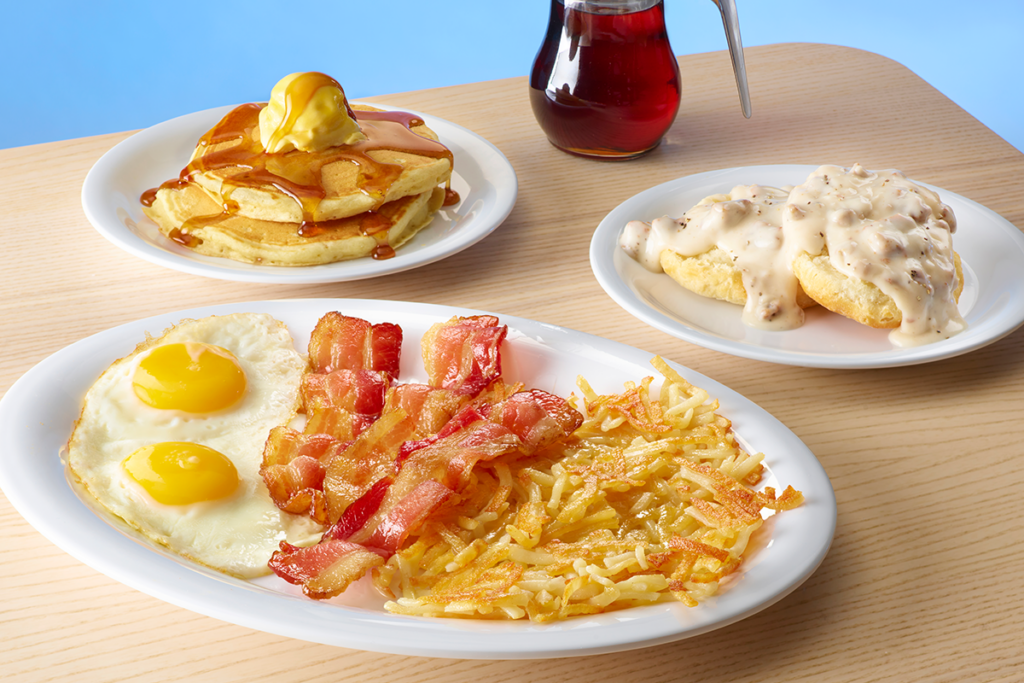
Its edge is daypart coverage. An all-day menu spreads sales across breakfast, lunch, dinner, and late-night traffic. So one location earns from a single fixed cost base at several points in the day.
Counter-service brands often live on one or two dayparts, which leaves the dining room quiet for hours. A diner keeps earning through the slow stretches that a burger counter would sit empty. That steadier flow of revenue helps a smaller building pull its weight.
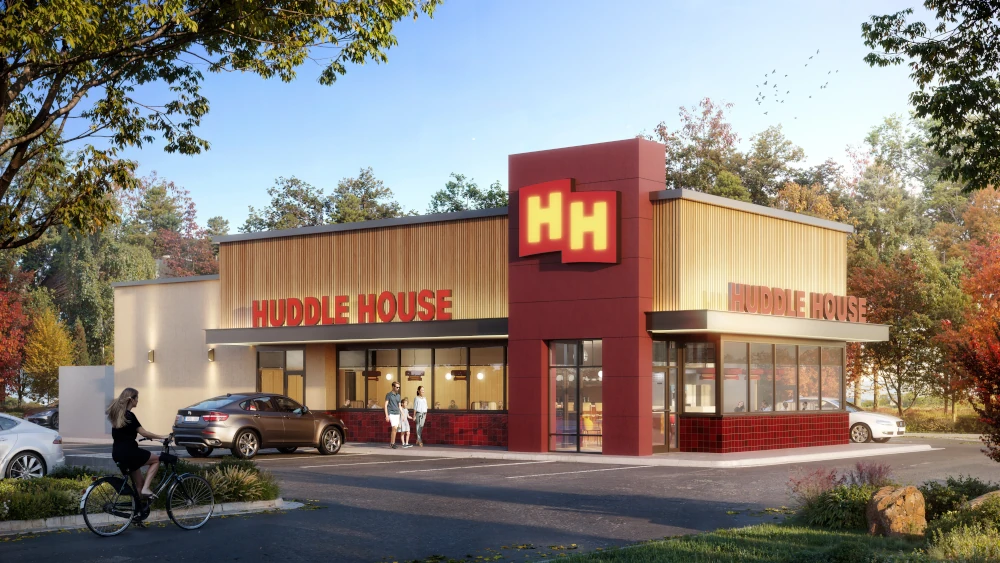
Huddle House shows how the math works. According to Huddle House’s FDD, its newer Express format runs 1,200–1,500 sq ft, compared with 2,000–2,900 sq ft for a traditional unit. That smaller box still supports the brand’s all-day breakfast and diner menu, but at a fraction of the footprint.
Huddle House has run this playbook since 1964. It opened in Decatur, Georgia as a spot where the community could gather after Friday night football games. That heritage matters to a buyer, because a concept with decades of history has already worked out its recipes and its operating rhythm.
For more on the segment, check out Huddle House’s take on why breakfast concepts thrive.
What a Small Restaurant Franchise Costs
Cost is where many first-time buyers get confused, because a franchise has two price tags that are easy to mix up. One is the one-time franchise fee. The other is the full initial investment needed to open the doors.
Mixing up these two numbers can wreck a budget. A buyer who plans only for the franchise fee will run short of cash the moment construction and equipment bills arrive. Treat the fee as the entry ticket and the full investment as the true cost of opening.
Both numbers vary by format, and both are disclosed by law. This transparency comes from the FTC Franchise Rule. The Rule requires franchisors to provide a disclosure document containing 23 specific items of information about the offered franchise.
Huddle House lays out both layers in its full cost breakdown so you can see where each dollar goes.
Franchise Fee vs. Total Investment
The franchise fee is a one-time payment for the license to use the brand and system, and it does not build your restaurant. The total initial investment is everything it takes to open, including build-out, equipment, real estate, and working capital.
Working capital is the cash you keep on hand to cover early operating costs before the business supports itself. All franchise brands require robust working capital to keep the doors open, lights on, and griddle going while you find your footing.
Huddle House prices its franchise fee by format. According to its Franchise Disclosure Document, the fee is $35,000 for a traditional unit. The same FDD lists $25,000 for a standalone Express unit and $15,000 for a non-traditional unit.
The full investment is a bigger number. Huddle House’s FDD lists a total initial investment of $555,375–$1,715,275 for a traditional unit that owns or leases land and building. Smaller formats carry lower fees and footprints, which pulls their opening costs down.
The wide spread inside that range reflects real choices. Owning your land and building sits at the top of the range, while leasing a converted space sits much lower. That is why the format and the real estate decision drive your total far more than the franchise fee alone.
Ongoing Fees to Plan For
Beyond opening costs, you pay ongoing fees as a share of sales. A royalty is a recurring fee you pay the franchisor, figured as a percentage of your sales. According to Huddle House’s FDD, franchisees pay a 4.75% royalty on net sales.
There is also an advertising fund contribution. Huddle House’s FDD sets that at 3.5% of net sales for a traditional unit and 1% for a non-traditional unit. These fees pay for brand marketing and the support system behind your restaurant.
It helps to view these percentages as the price of a proven system rather than a tax. The royalty funds the coaching, recipes, supply chain, and marketing you rely on every day. When you plan your budget, work these fees into your sales projections from the start.
How Smaller Formats Lower Overhead
Overhead is simply the cost of keeping the lights on, and a smaller building lowers most of it. Less square footage means lower rent and fewer build-out dollars during construction.
Staffing gets leaner too, because a compact floor plan needs fewer people per shift. A focused menu also cuts food cost and waste, since you buy and prep a tighter set of ingredients. All of this shortens the path to breakeven, the point where sales cover your costs with nothing lost.
The savings compound month after month. Occupancy and labor are the two costs that sink most new restaurants, and a smaller box trims both. Food waste drops as well when the menu is focused, so a smaller format lowers the bar you have to clear.
“A reduced operational footprint significantly optimizes the financial model for first-time owners,” notes Natalie Hoyt, CFE, Vice President of Franchise Development at Huddle House. “By aligning labor and real estate expenses directly with revenue volume, owners can accelerate their timeline to profitability and achieve greater peace of mind.”
Before you commit, build the habit of evaluating unit economics to judge a location by its costs, not just its sales.
Flexible Locations and Smaller Markets
Smaller and rural markets often carry lower rent and fewer competing restaurants than crowded suburbs. For a limited-capital owner, that can mean a stronger position from day one.
Compact formats also fit more kinds of real estate. A small box can fit an end-cap (the end unit of a strip center) or an in-line space. It also works in a converted building or a non-traditional site like a travel plaza or truck stop.
Flexible real estate matters most for limited-capital owners, because more site options mean more chances to land affordable space.
A small town also brings loyalty that big markets rarely match. When a diner becomes the local gathering spot, regulars come back week after week and bring their neighbors. That word-of-mouth traffic costs nothing and steadies your sales through the year.
“Some of our highest-performing locations thrive in markets that other brands overlooked,” notes Natalie Hoyt, CFE, Vice President of Franchise Development at Huddle House. “Our optimized, compact format allows owners to capitalize on reasonable real estate costs while fulfilling a genuine demand for a central community hub.”
Huddle House details its many flexible location formats, from conversions to travel-plaza sites.
Judging ROI and Payback the Right Way
Headline revenue is a trap. A location with high sales can still lose money if its costs run high, so smart buyers study unit economics instead. Unit economics is the profit and cost picture of a single location: its profit margins, labor efficiency, food costs, and daypart sales.
Return on investment (ROI) measures how much profit you earn back relative to what you put in. This is where daypart coverage pays off.
A concept that earns from breakfast through late night spreads more revenue across the same fixed costs. That can improve the return on each dollar of rent and equipment.
The demand backdrop is large. In the National Restaurant Association’s restaurant industry outlook, total restaurant and foodservice sales are projected to reach $1.55 trillion in 2026, with employment reaching 15.8 million.
No one can promise you a profit, and you should be wary of anyone who does. A franchise’s earnings context lives in Item 19 of its FDD, and real results vary widely from one location to the next.
Payback is the timeline you should map next. Estimate how long your projected profit will take to return your initial investment, then stress-test it with a slower sales year. A model with lower overhead usually recovers your money faster, which gives you a cushion if the first year runs soft.
Margins matter more than the top-line number here. A location that keeps food and labor in check can out-earn a busier one that lets those costs drift. Ask any franchisor to walk you through how its best and average units actually manage those lines.
Doing Your Due Diligence Before You Sign
Due diligence is the homework that protects your money. Start by reading the full FDD, then call current franchisees and ask them plainly about their costs and what surprised them.
Focus on two sections in particular. Item 7 lays out the full investment range, and Item 19 covers financial performance. Plan enough working capital to carry the business through its early months.
When you call current owners, ask about the numbers guides gloss over, like opening timelines and real labor costs. Also ask whether sales held up in slow months and whether the franchisor answered the phone when things went wrong. Owners who are a year or two in give the clearest read on daily life.
The law gives you time to do this. Under the FTC’s 14-day disclosure requirement, franchisees must receive the FDD at least 14 calendar days before signing a binding agreement or making a payment.
Support quality separates a smooth opening from a rough one, so weigh the franchisor’s training and site support before you decide.
Frequently Asked Questions
What is the cheapest restaurant franchise to open?
The cheapest options are usually mobile units and non-traditional locations like kiosks or truck stops, because they need less space and carry lower franchise fees. Costs still vary widely by brand and market.
How much does it cost to open a small restaurant franchise?
It depends on the format, since the one-time franchise fee and the full initial investment are separate numbers. Every franchise discloses its full range in Item 7 of its FDD.
Can I open one without restaurant experience?
Yes, many franchisors train first-time owners on operations and provide site help. Huddle House, for example, offers initial and ongoing training plus site selection guidance.
Is a small restaurant franchise profitable?
It can be, but profit depends on your unit economics rather than the brand name alone. Review Item 19 of the FDD for financial context, and remember that results vary by owner and location.
Do small franchises work in small towns?
Yes, and compact formats are often a better fit than large flagships in smaller markets. Lower rent and less competition can work in an owner’s favor.
How much of my costs go to ongoing fees?
Ongoing fees are charged as a percentage of your sales, covering royalties and an advertising fund. At Huddle House, per its FDD, that is a 4.75% royalty plus a 3.5% ad-fund contribution for a traditional unit.
How big and stable is the restaurant industry?
It is large and steady. According to BLS food services employment data, the U.S. food services and drinking places sector employed roughly 12.3 million workers across about 727,892 private establishments as of early 2026 (preliminary).
Finding the Right Small Franchise for You
A small restaurant franchise can take many shapes, and that is good news for your budget. The right model might be a food truck or the compact full-service diner that keeps a full menu inside a smaller box.
Whatever you choose, the fundamentals hold: keep your overhead low and do the FDD homework before you sign. A smaller market can be an asset rather than a limitation. The owners who succeed tend to pick a format they can afford to run through a slow season, not just open.
Huddle House was built for this kind of owner. Its compact formats keep overhead low, and its all-day menu spreads revenue across four dayparts in the small towns other brands overlook. If you want to see whether the numbers fit your goals, learn more about this incredible restaurant franchise opportunity.